Biobanking as a Newsletter – September 2021
Here is your monthly curated pick of biobanking news, jobs, and events from across the globe. We hope you will find this enriching and useful. Please do let us know …
Here is your monthly curated pick of biobanking news, jobs, and events from across the globe. We hope you will find this enriching and useful. Please do let us know …
The All India Institute of Medical Sciences (AIIMS), Bhubaneswar will soon have a brain bio-bank to facilitate neurobiology research. The one of its kind facility in eastern India will be …
Families of targeted missing Australian service members will be invited to help establish a DNA Biobank to aid in identifying recovered remains, funded by a new $2.2 million Department of …
Biobanking refers to the practice of collecting human and animal biological samples, including blood, urine, bone marrow, saliva, spinal fluid, and tissue, for research purposes to further our understanding of …
A team from the Hubrecht Institute in collaboration with Erasmus MC University, both the Netherlands, have developed an organoid biobank of mutant intestinal organoids to investigate the genes responsible for …
The Open Source Imaging Consortium (OSIC) today announced the launch of its global, data-rich repository of anonymized HRCT scans and clinical information regarding interstitial lung diseases (ILDs). This first-of-its-kind database is …
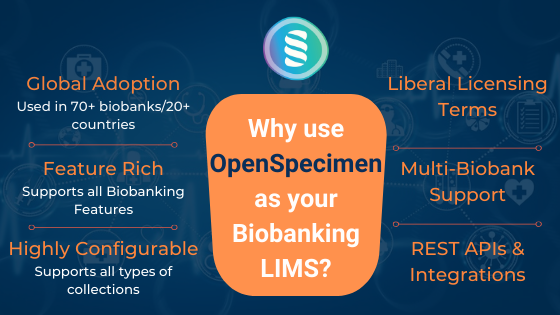
Biobanks play a vital role in research by collaborating with pharmaceutical industries and clinical research organizations. Biobanks provide various services required for clinical research (e.g., biospecimen processing and analysis) and …
The cells, tissues and organs critical to modern medicine and scientific research alike are in short supply, and the processes used to bank or preserve them are tricky and expensive. …
Whether they were hospitalized at Michigan Medicine, U-M’s academic medical centre, or volunteered to have blood drawn or their nose swabbed by a U-M team after they recovered at home, …
Pre-clinical research is a particular challenge, and one place to look for new efficiencies is in the procurement of a critical resource—human biospecimens—including biofluids (e.g., blood), viable cells (e.g., immune …