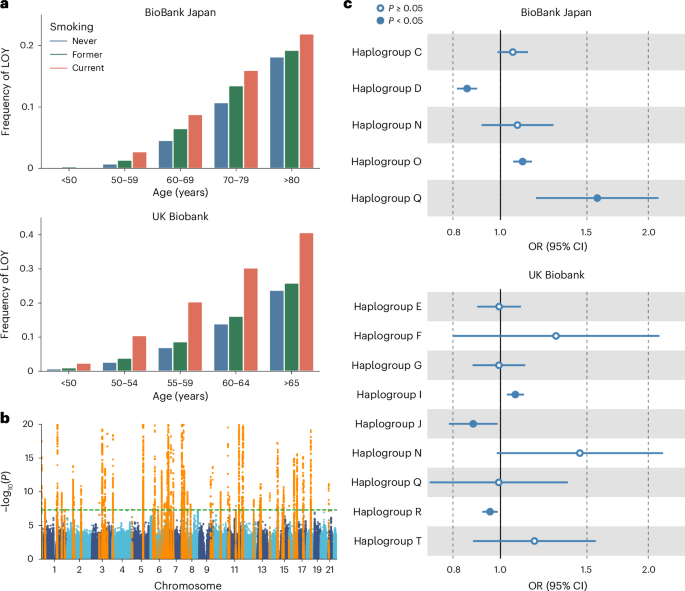
Abstract: For decades, the Y chromosome has been largely excluded from mainstream genetic studies. But new large-scale research across BioBank Japan and the UK Biobank suggests we may have been missing a crucial piece of the diabetes puzzle. By analyzing both inherited Y haplogroups and age-related somatic loss of the Y chromosome (LOY) in over 300,000 men, researchers uncovered male-specific genetic regulation linked to type 2 diabetes (T2D). In East Asian populations, LOY was associated with increased T2D risk, while a Japanese-specific haplogroup (D) appeared protective. Interestingly, the relationship looked different in Europeans, highlighting how ancestry, biology, and environment interact in complex ways.
What makes this study particularly powerful is its integration of polygenic risk scores, longitudinal follow-up, and single-cell analyses. The researchers found that incorporating Y chromosome variation improved diabetes risk prediction beyond traditional autosomal genetics. Even more compelling, LOY was enriched in pancreatic β cells, key regulators of insulin production, suggesting a direct biological mechanism. Together, these findings shift the narrative: the Y chromosome is not just a marker of sex, but an active player in metabolic health. This opens new opportunities for more precise, sex-aware approaches to diabetes prediction and prevention.
Link to the full study: https://www.nature.com/articles/s41591-026-04213-z