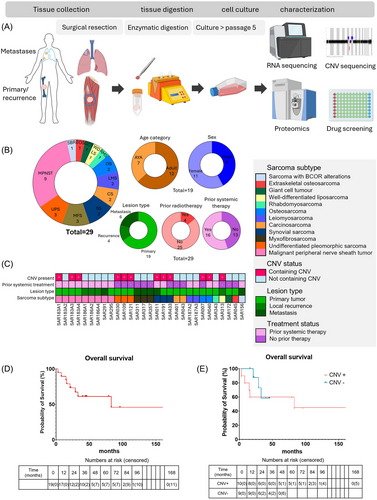
Abstract: Sarcomas are rare, highly aggressive cancers that come in more than 80 different subtypes. Because every patient’s tumor is molecularly unique, standard treatments often fail, and traditional lab-grown cell lines quickly morph into inaccurate models. To solve this problem, researchers have created a “living biobank” of 29 early-passage Patient-Derived Cell (PDC) cultures. By taking fresh tissue directly from surgery and growing it for only a brief period, the team successfully preserved the natural biology, tumor evolution, and distinct characteristics of 11 different sarcoma subtypes.
The team analyzed these living samples using a combination of gene and protein mapping techniques. They discovered complex genetic errors, including the loss of key genes that normally stop cells from growing out of control. Crucially, the researchers used this living database to run high-throughput drug testing across 38 different treatments. They discovered that while standard DNA sequencing couldn’t predict which drugs would work, the living cell models quickly exposed hidden vulnerabilities to specific therapies, such as Trabectedin and PI3K-mTOR inhibitors. This framework demonstrates that living repositories can serve as powerful, real-time testing grounds for identifying effective treatments for rare diseases.
Get the full article here: https://onlinelibrary.wiley.com/doi/full/10.1002/ctm2.70722