Abstract: Biobanks play a central role in modern biomedical research, storing sensitive biological data that increasingly shapes healthcare, policy, and public understanding. In countries like Japan, press releases are a key bridge between biobank-driven research and society, often serving as the primary source for journalists and the public alike. However, when research findings involve long-lasting, personal, and predictive data, poor communication can unintentionally cause harm through misinterpretation, stigma, or false expectations. This research article highlights how the way biobank-based findings are communicated is just as important as how they are collected and analysed.
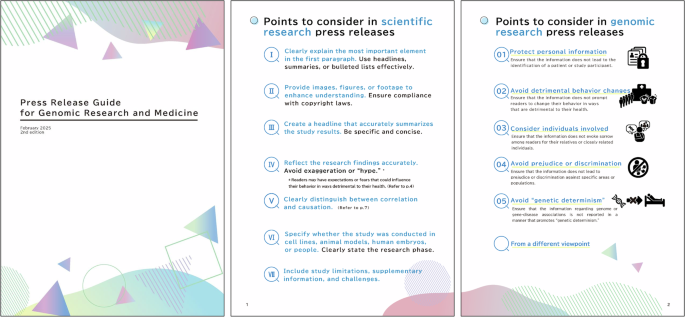
Drawing on collaboration between researchers, press officers, patients, and members of the public, the study introduces a structured press-release guide tailored for genomic and biobank research. The guide outlines practical principles such as protecting participant identity, avoiding misleading claims, preventing discrimination, and resisting genetic determinism. By embedding public perspectives into research communication, it reframes biobanks not merely as repositories of samples, but as shared societal resources. As biobanking becomes more embedded in clinical and public life, responsible communication is essential to maintaining trust, transparency, and long-term value.
Source Link: https://www.nature.com/articles/s10038-026-01452-3