Can movies be a source of evaluating and boosting your critical thinking? Most of us view movies as plain entertainment—a way to relax and turn off our brains. Recently, however, I had the opportunity to attend a unique session that jogged our minds and led us to view even the simplest movie from a fresh perspective.
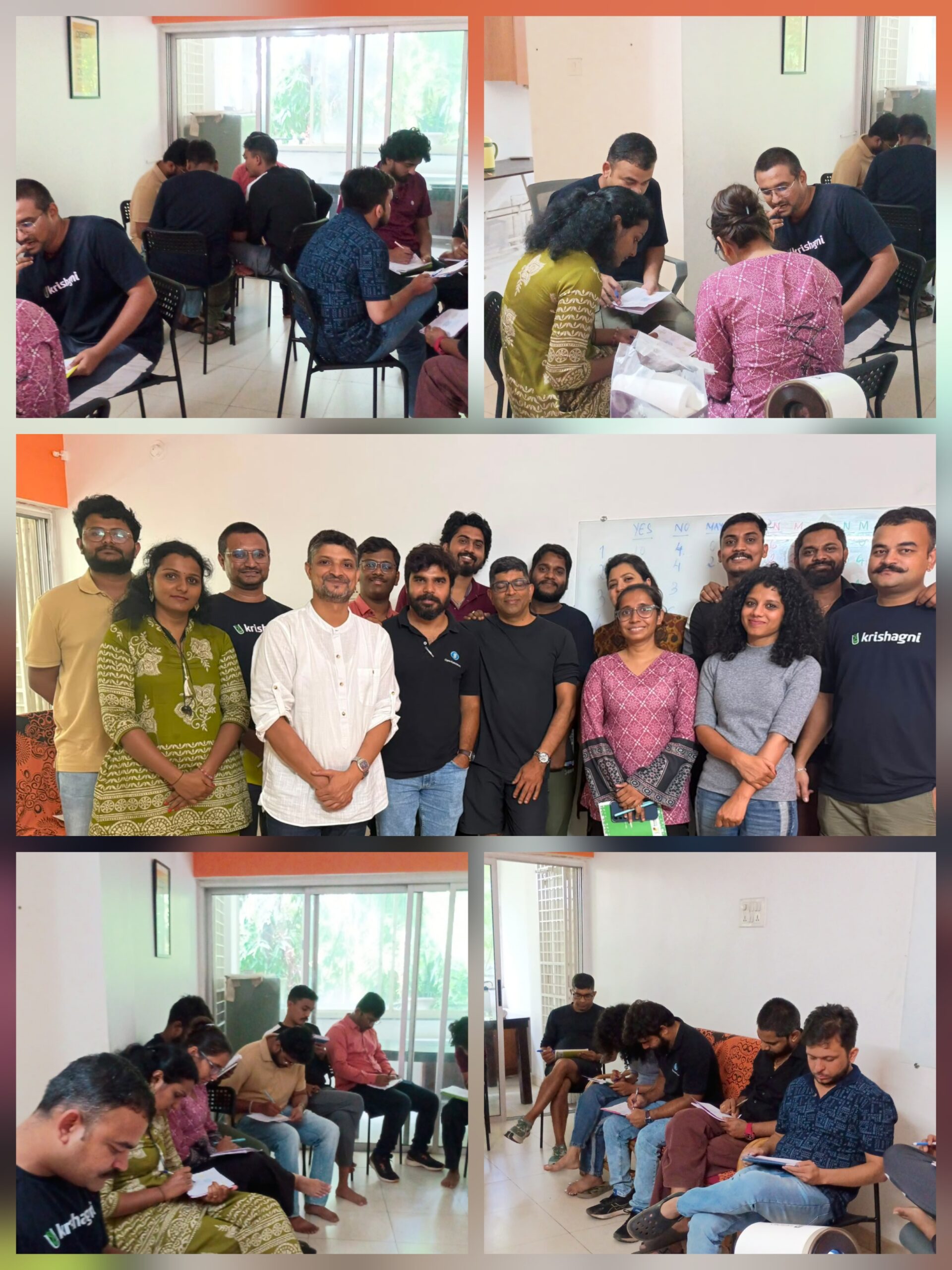
This one-of-a-kind session was conducted on July 10 at the Krishagni office by Breakfast@Cinema. The hosts of this interactive workshop, Shibangi Das and Abhinav Kandarp, demonstrated how cinema can be used as a powerful tool for mastering critical thinking through a series of practical exercises.
Segment 1: The Jungle Experiment
The session started with an imaginative thought experiment: Imagine being stranded alone in an unknown jungle when a flash of yellow speeds your way. What is your first response?
Answers poured in from all across our team. Some suggested climbing a tree, others wanted to hide, and a few preferred to wait and observe—hoping it might be a vehicle to flag down for help.
The hosts accepted every answer, explaining that any response could be right or wrong depending entirely on the context:
- If the yellow flash was a tiger, waiting to inspect it could be fatal, and climbing a tree would fail since big cats are excellent climbers.
- On the other hand, if it was a rescue vehicle, running away meant a missed opportunity for salvation.
Key Takeaways:
- Our personal knowledge and past experiences heavily shape our decision-making.
- There is nothing wrong with making quick initial decisions, but ultimately, we must analyze them thoroughly before acting.
- Force yourself to evaluate all available options to find the best possible solution.
Segment 2: Analyzing Hugo
To put our observation skills into practice, we moved to the next segment featuring a clip from Martin Scorsese’s Hugo (2011). While watching the first five minutes of the movie, we were asked to write down answers to three simple questions: What has happened? What is happening? What will happen next?
After the clip ended, we discussed our notes as a team and pieced the narrative clues together:
- Location: Paris, France (spotted via the Eiffel Tower in the opening shot).
- Time Period: Post-World War I (indicated by steam engines and happy soldiers returning to their families).
- The Main Character: An orphan boy living inside a clock tower (inferred from his worn-out clothes and intimate knowledge of the tower’s hidden passageways).
- The Shopkeeper: An old man watching the boy closely (he attempted to trap him by placing a toy mouse on the counter while pretending to sleep).
Key Takeaways:
- Facts and clues are often right in front of us; we just need to connect them.
- Complex, confusing problems become manageable when broken down into smaller parts.
- Context and reference points are what give raw information its true meaning.
Segment 3: The Story Game & Group Dynamics
Once our individual abilities to spot clues were established, the next segment tested our thinking in a group setting. For this exercise, we were handed a short, puzzling story about three characters: a businessman, a shop owner, and a thief. We were tasked with answering a series of questions using only Yes, No, or Maybe.
We began by evaluating the story individually, then moved into pairs, expanded into groups of four, and finally came together as one big team. Surprisingly, as our groups grew larger, our answers kept changing! This shift led to lively debates, passionate disagreements, and a healthy dose of chaos.
Key Takeaways:
- Group discussions help us see new angles, challenge our existing assumptions, and spot details we initially missed.
- Asking clear questions is vital. The chaos ensued because no one asked the hosts for clarification—everyone simply relied on their own unverified assumptions.
Segment 4: The Big Picture (Pavement)
The chaos and debate in Segment 3 occurred precisely because people made assumptions based on incomplete information. This brought us to Segment 4, where the short film Pavement visually demonstrated why those misinterpretations happen in the first place.
Before the film played, we were given worksheets to record our observations. The movie began with extreme close-up shots of a single scene and slowly zoomed out step by step. Every time the camera revealed more of the frame, our understanding of the narrative completely transformed.
Key Takeaways:
- Always look at the full picture before jumping to conclusions.
- People can observe the same event yet perceive it entirely differently based on their personal life experiences.
Conclusion
What started as a simple movie session turned out to be a masterclass in perspective. By the end of the workshop, it became clear that critical thinking isn’t just an abstract skill—it is a muscle we build by slowing down, questioning our assumptions, and seeking the broader context. Cinema, as it turns out, is much more than an escape from reality; when viewed through the right lens, it is a powerful mirror for how we observe, interpret, and navigate the world around us.